Aceria salviae - Salvia pratensis
Group: Gall (Eriophyidae)
Taxon: Aceria salviae
Host/Substrate: Salvia pratensis (Meadow sage)
Date: 2026-04-26 (Spring)
Habitat: Garden, dry soil, full sun
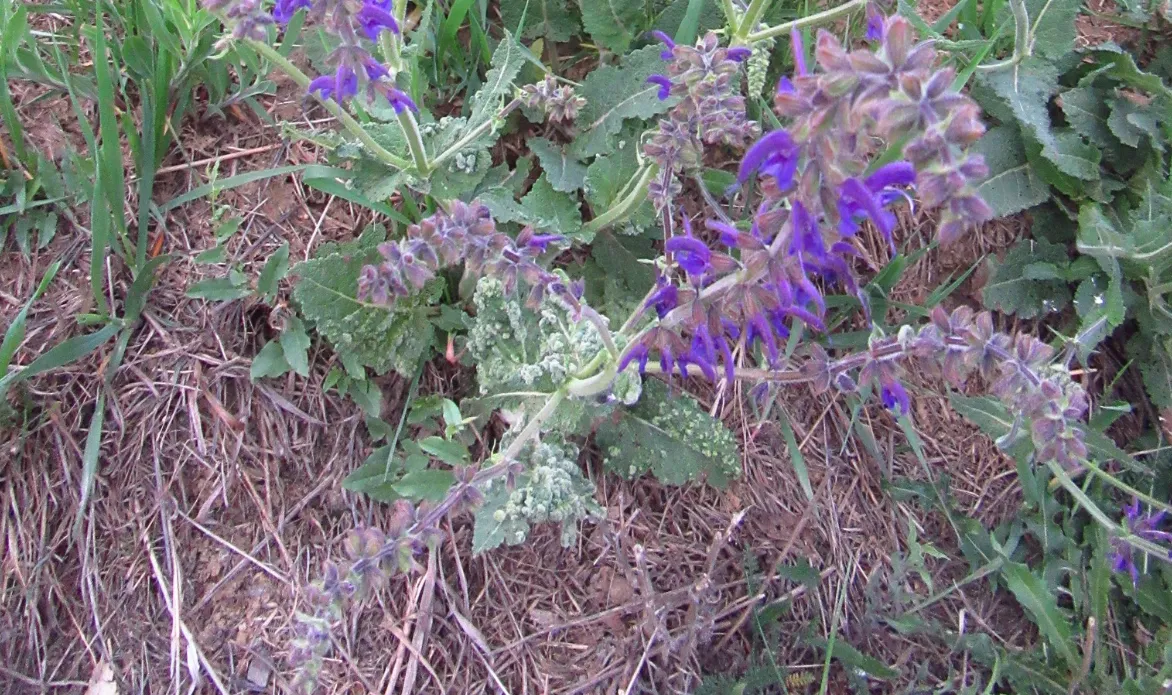 Gall in situ on host plant in natural setting
🌿 Observation
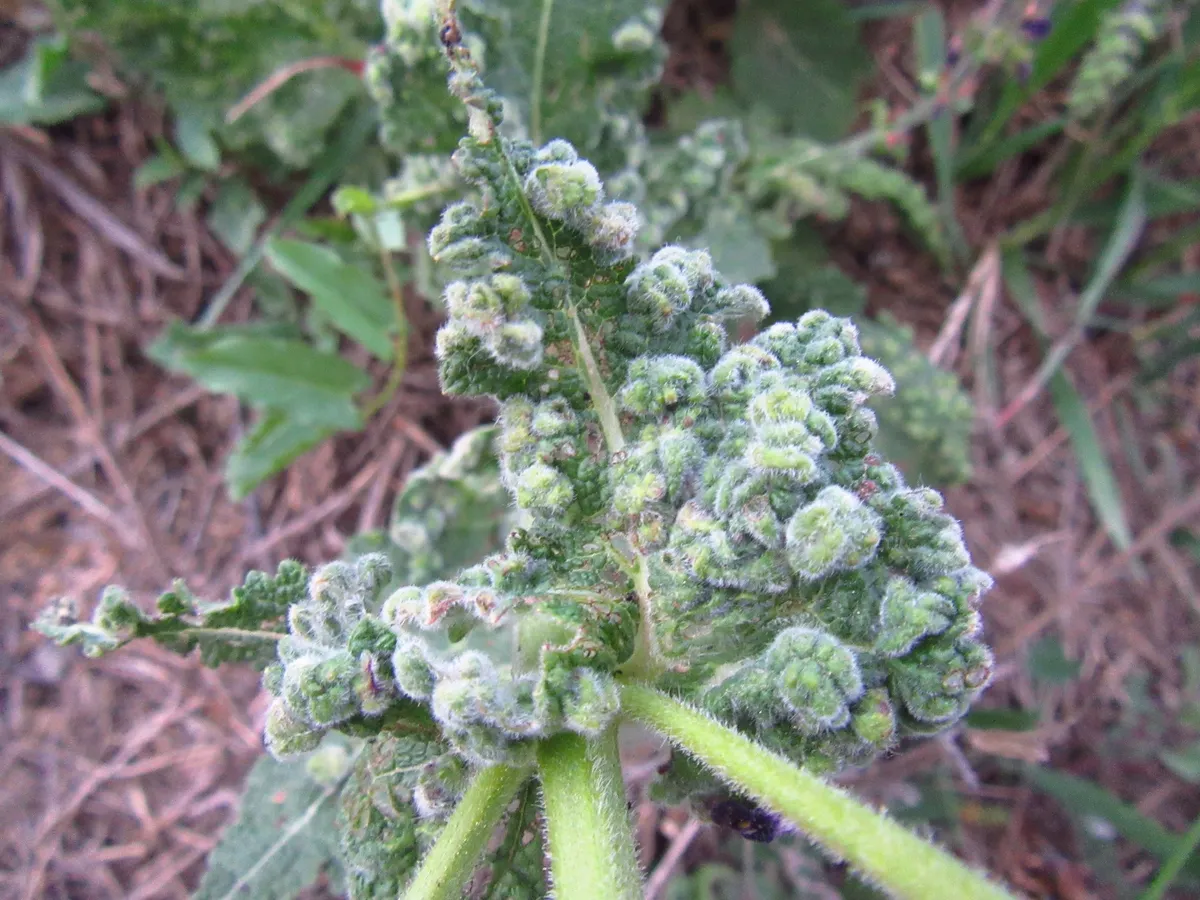 Main diagnostic view of gall structure
While wandering through the garden, I noticed unusual deformations on a Meadow Sage plant. The leaves showed dense clusters of irregular, blister-like growths.
At first glance, the leaf surface appeared almost mossy or frosted. On closer inspection, these structures were made up of many small, rounded protrusions, all tightly packed together.
The deformation was not limited to a single spot but spread across larger parts of the leaf, giving it a distorted, uneven appearance.
Although several plants were growing together at this spot, only one individual showed this deformation.
🔬 Notes / Identification
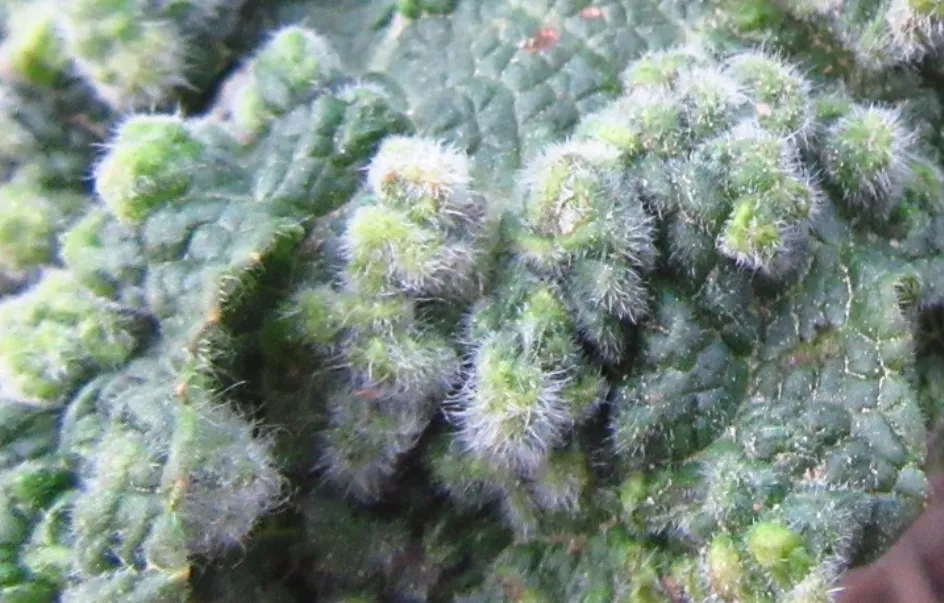 Close-up of the erineum
Identification process
To identify this deformation, I worked through a dichotomous key for galls associated with Salvia.
The leaf shows dense clusters of blister-like protrusions with a soft, felted surface, spread across the leaf.
This rules out:
- aphids, which typically cause leaf curling rather than structured growth.
- fungal infections, which produce spots, pustules, or coatings rather than organized tissue.
The presence of this hairy tissue, known as an erineum, points toward eriophyid mites.
Following the key leads directly to → Aceria salviae
(Identification based on a dichotomous key for Salvia gallers (see Bladmineerders))
Note
Although often grouped with galls, this is technically an erineum rather than a true chambered gall.
🌱 Context / Ecology
Aceria salviae is an eriophyid mite that induces the formation of erinea, dense mats of modified plant hairs, on the leaves of Salvia species.
- Feeding activity: The mites feed on leaf tissue, stimulating abnormal hair growth
- Erineum formation: The plant responds by producing dense, felt-like structures
- Protection: These structures provide shelter for the mites
- Seasonality: Most visible in spring and early summer when leaves are actively growing
Unlike many insect galls, these structures:
- do not form enclosed chambers
- do not contain a single larva
- instead host many microscopic mites within the hair layer