Eriophyes exilis - Tilia sp.
Group: Gall (Eriophyidae)
Taxon: Eriophyes exilis
Host/Substrate: Tilia sp. (Lime / Linden)
Date: 2026-04-28 (Spring)
Habitat: Roadside tree, shaded edge
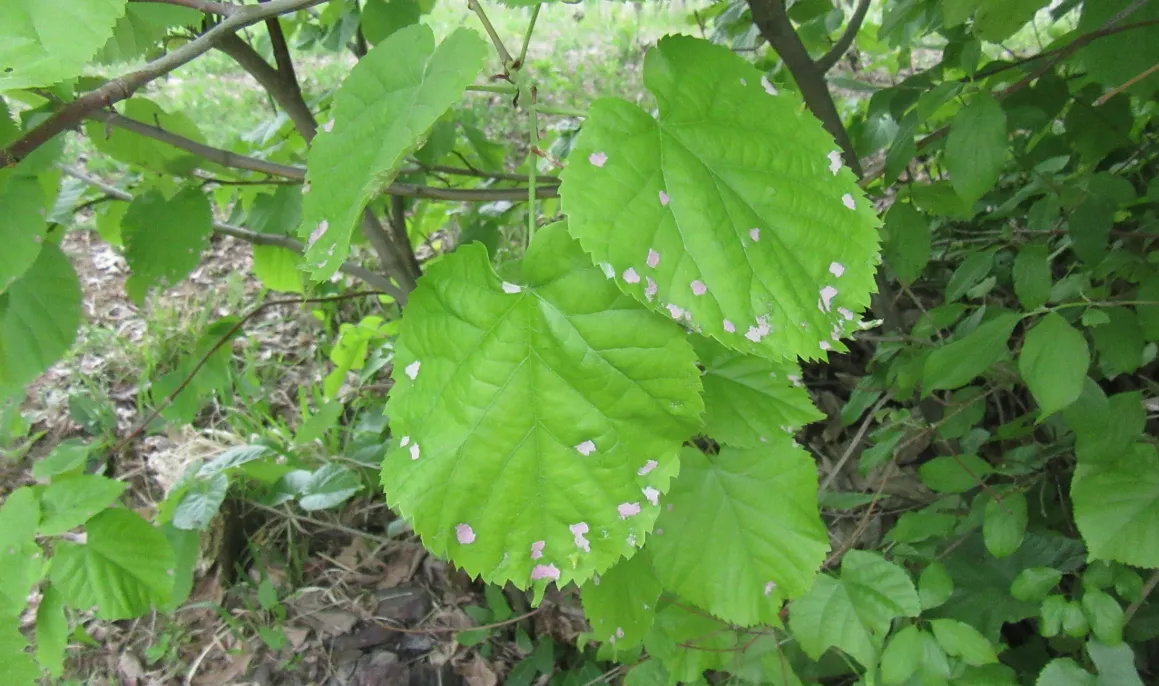 Erinea on leaf in natural setting
🌿 Observation
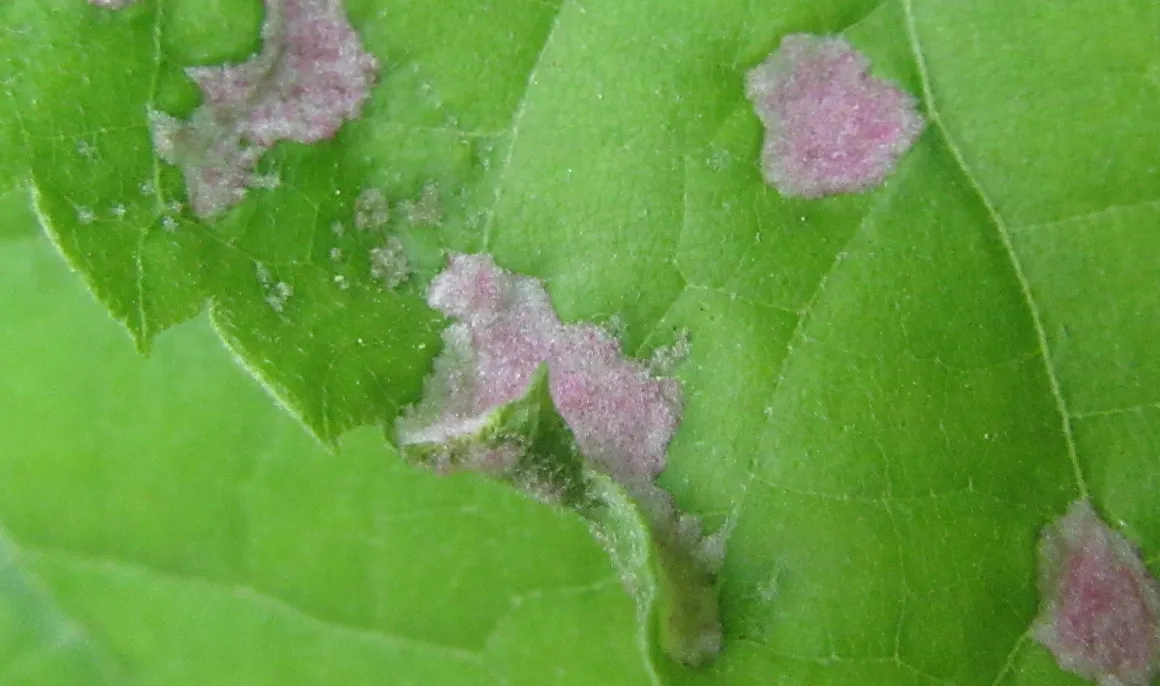 Characteristic patches on the leaf surface
On a lime tree, I noticed several pale pink to whitish patches scattered across the leaf surface.
At first glance, they looked like small, irregular stains. On closer inspection, these patches consist of dense, felt-like growths, often concentrated between the veins and sometimes merging into larger areas.
The leaf itself remains largely flat, with only slight distortion.
🔬 Notes / Identification
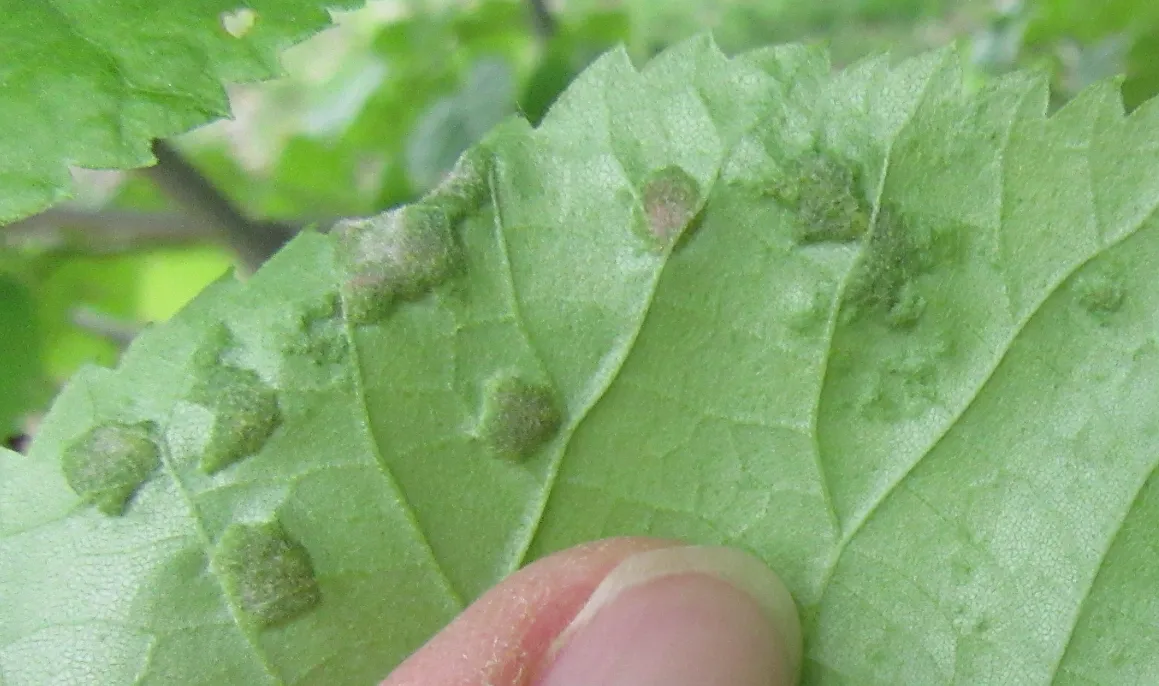 Underside of the leaf
Identification process
I worked through a dichotomous key for galls associated with Tilia.
The leaf shows localized patches rather than distinct enclosed galls, which directs the key toward erinea (hair galls) rather than pouch or blister galls.
Following the key:
- No rolling, curling, or strong deformation of the leaf
- No horn-like or pouch-shaped structures
- Presence of dense, felt-like hair patches on the leaf surface
This leads to the erineum-forming eriophyid mites.
More specifically:
- Patches are irregular, often coalescing
- Colour ranges from whitish to pinkish
- Located between veins rather than strictly in vein axils
This matches:
→ Eriophyes exilis
(Identification based on a dichotomous key for tilia gallers — see Bladmineerders)
Note
These structures are erinea, not true enclosed galls.
They consist of dense mats of modified plant hairs induced by mites, forming a microhabitat on the leaf surface.
🌱 Context / Ecology
Eriophyes exilis is an eriophyid mite that induces the formation of erinea on lime leaves.
- Feeding activity: mites feed on leaf tissue, triggering abnormal hair growth
- Structure: dense, felt-like patches (erinea) develop on the leaf surface
- Function: provides shelter and a stable microclimate for the mites
- Seasonality: most visible in spring and early summer
These erinea:
- do not form enclosed chambers
- do not contain a single occupant
- instead host many microscopic mites within the hair layer
They are common and often overlooked due to their subtle appearance.