Taphrina ulmi - Ulmus minor
Group: Gall (Taphrinaceae)
Taxon: Taphrina ulmi
Host/Substrate: Ulmus minor (Field elm)
Date: 2026-04-27 (Spring)
Habitat: Roadside verge, mature tree in grassy vegetation
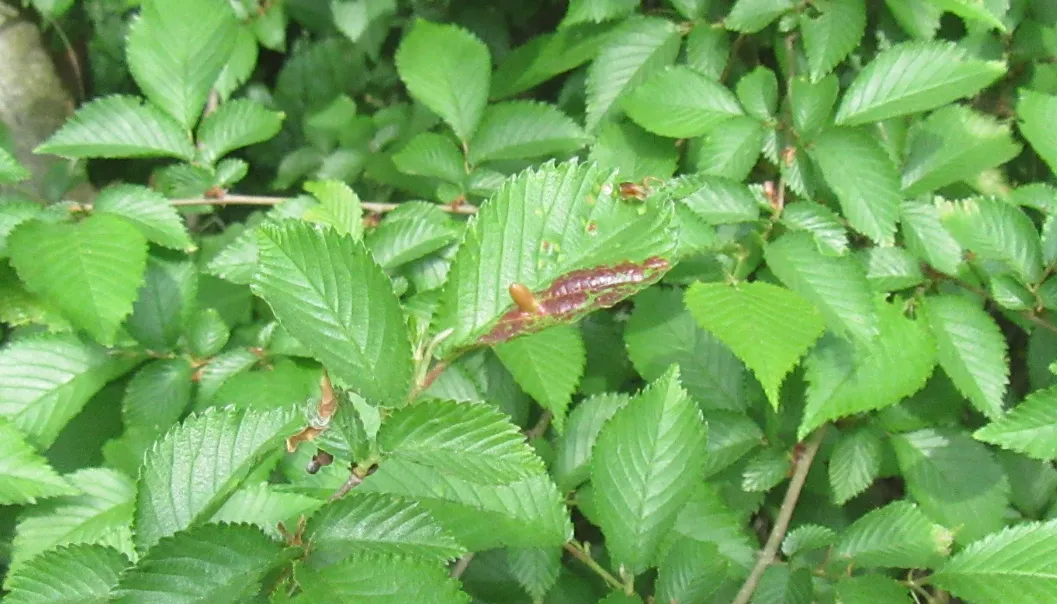 Infection in situ on host plant
🌿 Observation
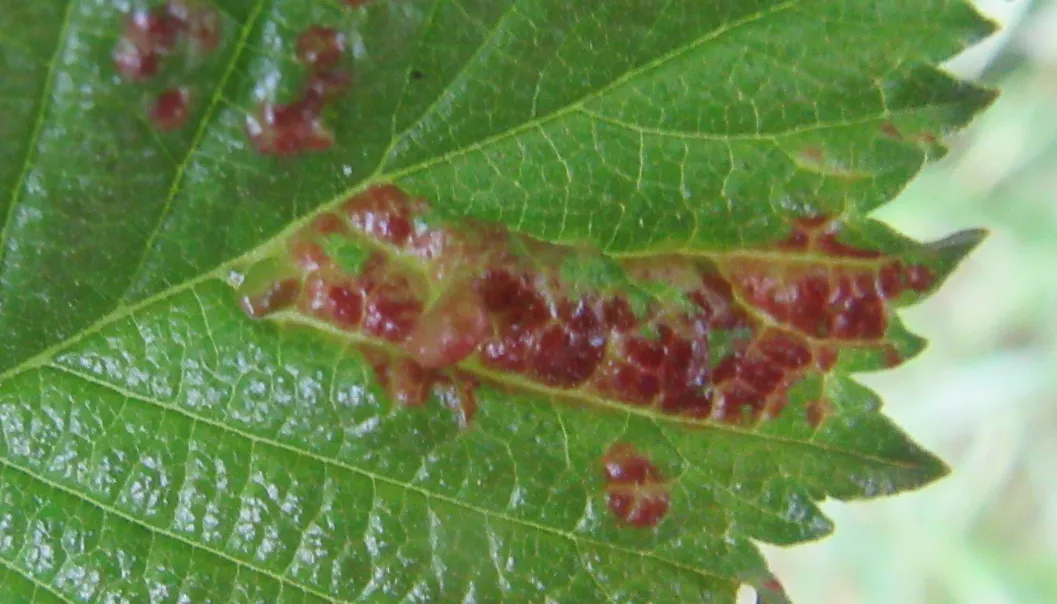 Main diagnostic view of the leaf deformation
While examining elm leaves along the roadside, I noticed irregular reddish patches developing along the veins.
These were not distinct galls, but rather diffuse deformations of the leaf surface. The affected areas appeared slightly blistered and uneven, with a somewhat glossy, swollen look.
Some patches remained isolated, while others had begun to merge into larger, irregularly shaped areas.
🔬 Notes / Identification
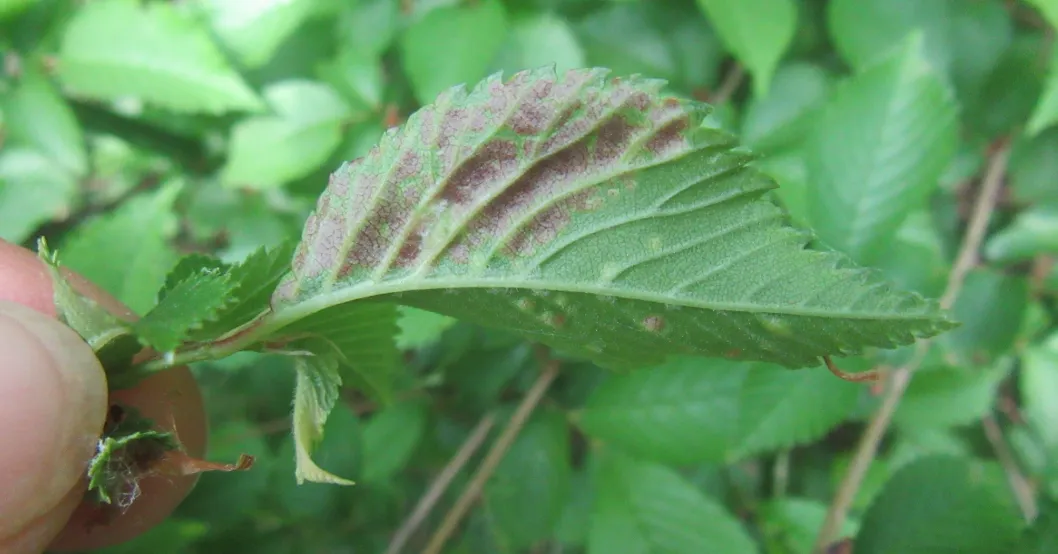 Blistered and discoloured leaf tissue visible on both sides
Identification process
I worked through a dichotomous key for galls associated with Ulmus.
The leaf shows irregular, blister-like patches, slightly raised and strongly discoloured. These are not enclosed structures, but diffuse malformations of the leaf tissue.
This rules out:
- aphid galls, which form distinct, closed chambers
- mite erinea, which produce dense, felt-like hair structures
Following the key leads to:
- flat to slightly raised malformations
- without abnormal pubescence
- blister- or patch-like structures, spread across the leaf
This combination points to a fungal cause rather than an insect gall.
What remains is:
→ Taphrina ulmi
(Identification based on a dichotomous key for elm gallers — see Bladmineerders))
🌱 Context / Ecology
Taphrina ulmi is a fungus that causes leaf distortions on elm species.
- Infection: Occurs on developing leaves in spring
- Effect: Induces abnormal growth, resulting in blistered, discoloured patches
- Structure: No enclosed gall; the fungus lives within the leaf tissue
- Appearance: Reddish to brownish patches, often following veins
Although often grouped with galls, this is not a true gall but a fungal deformation of plant tissue.
These infections can become more extensive over time, with patches merging and covering larger portions of the leaf.